


Working at the Port: Employee Interview: Veteran Port Supervisor Lasse Eskola
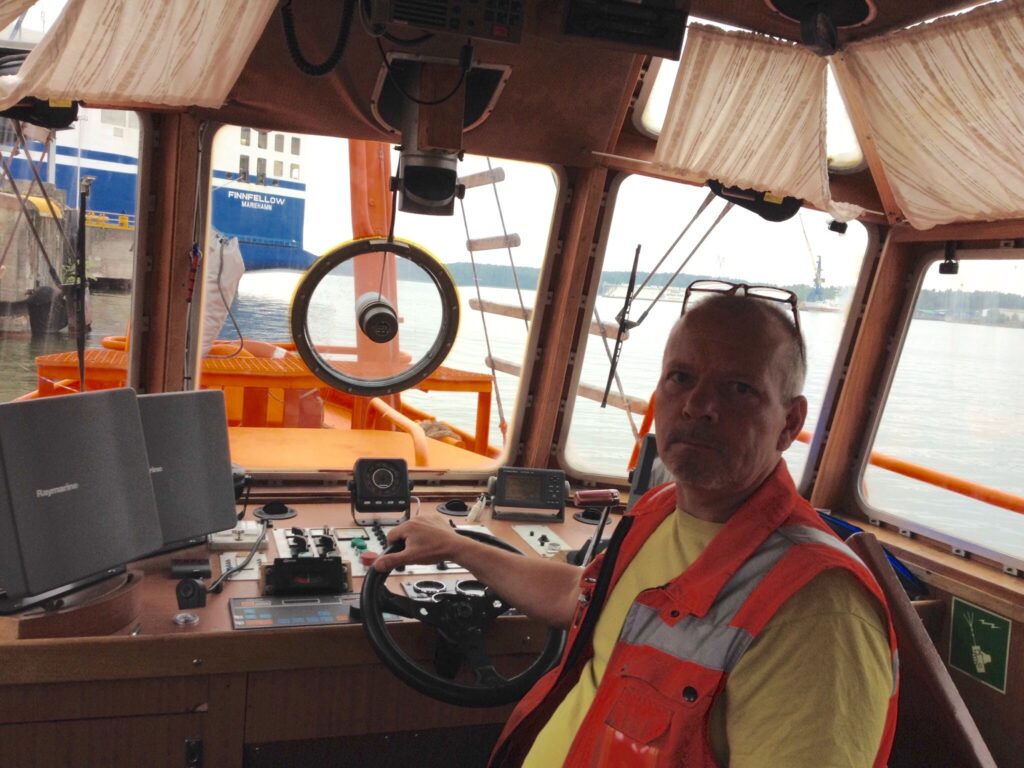 Port supervisors are continuously trained through various courses. We work in pairs on each shift, and the job allows us to make good use of each colleague’s special skills, such as construction or machinery maintenance.
Text and interview: Tarja Siekkinen
Port Supervisor Lasse Eskola started working at the Port of Naantali in 2004. He has had a long career at the port, serving as a port supervisor for a total of 22 years. Lasse is retiring this summer after his career in port supervision. His hobbies include swimming, going to the gym, and motorcycling.
He lives with his wife in Southwest Finland. Lasse definitely considers himself a “man of the sea,” although in the summer he also enjoys peaceful walks in the forest. He has been playing music for decades, having started with the electric bass in his youth. He plays both bass and guitar, although the bass is currently his favourite instrument.
“I’ve done many different kinds of work since my youth—almost 50 years in total. Of those, 22 years have been as a port supervisor at the Port of Naantali. Over the years, I’ve taken various work-related courses that have supported my role. The rescue training course held in Lohja was definitely one of the best—so action-packed! I have also considered first aid courses extremely important, as they allow you to respond immediately if something happens, whether at work or in your free time,” says Lasse Eskola.
How did you end up working at the Port of Naantali?
“I once took a water construction course in Turku, and during the training, the instructor asked whether I would like to do an internship at the Port of Naantali. I gladly started my training period at the port and later applied for an open position as a port supervisor.
Port supervisors are continuously trained through various courses. We work in pairs on each shift, and the job allows us to make good use of each colleague’s special skills, such as construction or machinery maintenance.
Before joining the port, I worked, for example, in the 1980s at Wärtsilä’s Turku and Pernio shipyards as a firefighter for about 6.5 years. I have also worked in construction and transport. I’ve really enjoyed working at the port—I’d say it’s the best workplace I’ve ever had. But now that I’m getting older, it’s time to retire.”
Access control is a key part of port supervision
When Lasse started at the Port of Naantali in 2004, construction of the Loisto main gate building began, and access control systems were further developed. Initially, access control was handled by an external partner based in the main gate building.
Later, access control became a major and essential part of the port supervisors’ duties, and it remains a central responsibility in their daily work. Over the years, the port has developed its safety systems and invested in various gate and security solutions.
Port supervisors previously handled pilot transport
Previously, port supervisors were also responsible for transporting pilots, maintenance personnel, and crew changes to and from anchored vessels. Most of the vessels were anchored near Rajakari.
Transport operations were carried out in all kinds of weather conditions, often at the mercy of the elements. Of course, operations were not conducted in excessively windy conditions, and safety considerations were always paramount. During the COVID-19 pandemic, these transport duties were transferred to Finnpilot.
The role of port supervisors has diversified over the years
The supervisors’ responsibilities also include maintenance of the yard areas, carried out using two wheel loaders. This spring, a new Wacker Neuson WL95 wheel loader was introduced, offering improved driving comfort and safer operations.
The port’s snow clearance and gritting are largely handled in-house. General maintenance and cleaning of the port area are also a significant part of the job. Sweeping and other cleaning of outdoor areas begin early in the spring. Wheel loaders are also used for unloading, moving goods, and various maintenance and repair tasks.
Oil spill prevention using booms – work boat Lamor
When an oil tanker arrives at the port, port supervisors deploy oil containment booms around the vessel. The booms are placed in the water from large hydraulic reels using a wheel loader at both ends of the ship and then positioned around the vessel using the Lamor work boat.
The stable Lamor vessel is also used for other tasks, such as retrieving sunken logs and assisting in quay repair work. Maintenance of the loaders and their attachments is also part of the supervisors’ duties. The Lamor vessel has proven to function well in port supervision use.
What do you dream about?
“I’m looking forward to comfortable and healthy retirement days. My daily rhythm will become more regular without shift work, and I’ll have more time for my hobbies—especially for exercise.”
“I’ve really enjoyed working at the port and can say it’s the best workplace I’ve ever had, but now it’s time to retire.”
Lasse is also looking forward to spending more time with his spouse and grandchildren. We warmly thank Lasse for his years at the port and wish him happy and relaxing retirement days.